John Lennon’s “Imagine”

Album cover for John Lennon's Imagine

This week, I’ve been listening to John Lennon’sImagine” from 1971. “Imagine” was Lennon’s second solo album after leaving The Beatles. My friend Mike Frost in High School listen to this CD a lot. He frequently played “Oh Yoko” for me, because it was my favorite. That was a couple decades ago, so I’d actually forgotten much of the album.

I was at first excited to get back into it, but on the first day I was underwhelmed. It seemed this album was overrated just because it was by John Lennon. The overly long “I Don’t Want To Be a Soldier” and the generic blues of the cheeky “It’s So Hard” failed to impress me. I mostly skipped the song “Imagine” simply because I’ve heard it a million times. Shame actually, because it’s an amazing song.

At the end of the week I was still saying the album was overrated, but realized upon reflection that I was wrong. The majority of the album is very good, even if there are some duds. It was actually difficult to narrow down which song I would focus on here. I opted to exclude “Jealous Guy” even though it is a beautiful tune; I also did not include Oh Yoko!” despite that fact I’ve loved it for years. Much of what I’d have to say about it can also be said about “Crippled Inside”

https://www.youtube.com/watch?v=S6CdpAhwpw8

“Crippled Inside” dances like a jaunty country-western pace on a vaudevillian stage. The song opens with finger-picked dobro guitar with slap-back delay, somewhat consistent with the delay Lennon often uses on his vocals. After that melodic intro, the guitar is joined by drums, honky-tonk piano, upright basses, acoustic guitar and slide dobro.

The verses follow a I-I7-IV-IV7-I-VI7-II7-V-I progression; simplified this is a I-IV-I-VI-II-V-I. The bass walks down that VI7 – II7 change to descend with the lines “One thing you can’t hide”, which is answered with the gently ascending “Is when you’re crippled inside.”

Each verse has the couplet refrain rhyming “hide” and “inside”. The first two lines of both verses rhyme “hymn/skin” and “face/race” and the third line has a long I vowel (“tie” and “die”) for a slant-rhyme with the refrain “hide/inside” rhyme.

The melody lines of the vocals are continued by trills on the piano and slide guitar. These keeps a constant flow going through the track while maintaining that country-western feel. I really love the sound of that dobro and piano combination.

The vitrolic track “All I Want Is Some Truth” jumps into Lennon protesting hypocrisy, politicians, critics, and bigotry. Or really, just about anything that grinding his gears. They’re well-written, pointed, lyrics; though, I can imagine an on-the-street interview with a young person on the streets in 1971: “Why you are gathered here today?” ” I’ve had enough of reading things by neurotic psychotic pigheaded politicians. All I want is the truth; just give me some truth.” And that’s part of why the song is so perfect for it’s time. I also really like Lennon’s vocal delivery, which has the same bitterness to it as the words.

The music however gets tiresome as it repeats the same short phrases over and over. The vocals are really what carry this song, with the accompaniment providing a beat and mood. That’s the basic job of accompaniment, but I feel it should provide more. The best part is the slide guitar, which was played by former Beatles bandmate George Harrison.

George Harrison also plays on the best song on the album that’s not “Jealous Guy”: “How Do You Sleep.” It seems odd to me that Harrison would play on a McCartney diss track. While it’s wholly inline with Lennon’s personality, it doesn’t seem like Harrison’s style.

As with the rest of the album, we’re hearing traditional rock instruments: drum, bass, acoustic guitar, electric guitar, electric piano, and vocals. There’s also some unobtrusive strings providing background padding, and occasionally between vocals lines giving some Indian motifs. For the most part, these instruments are with very minimal effects. There’s a little overdrive and reverb, plus some tight delay, but otherwise a very clean sound.

Again, one of the best parts of the song is Harrison’s guitar playing. You can watch him play in recently released outtake footage on Youtube. The bass played by Klaus Voorman, especially during the chorus, gives the song great movement and bounce. Each of these instruments are interacting with each other in a united conversation. The conversation goes back and forth, each reacting to the other.

There are some incredible tracks on this album, but overall I think it is a little week, especially in the middle. It opens with three great songs and closes with three great song, then there’s four songs in the middle that I could mostly do without. Oh well.
Kate Bush’s “Hounds of Love”

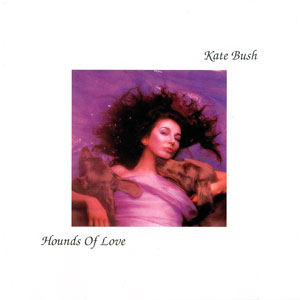
Album cover for Kate Bush Hounds of Love

This week, I’ve been listening to Kate Bush’s fifth album “Hounds of Love” from 1985. This was really my introduction to her work. I previously only knew “Running Up That Hill” through the Placebo cover. I had listened to the original as a result, but hadn’t pursued her work any further. I expected the rest of the album to be like “Running Up That Hill.”

While that is a great song, I found the rest of the album to be wildly imaginative. Especially, the second half which forms a conceptual suite of songs. The weird track “Waking the Witch” caught me off-guard. IT opens somewhat atmospheric with various samples of people saying “wake up.” Then the songs explodes into driving synth; vocals shatter across the stereo field with extreme pulsing tremolo, overpowered by evil voices. Its this track that first made it clear to me that something of a larger narrative was happening on these songs. This and some other parts of the Ninth Wave remind me a little of contemporary Skinny Puppy.

“Running Up That Hill” opens the album with a driving percussion and synth lines. This rhythm combined with the minor key gives the song a combined sense of urgency and longing. This suits the lyrics perfectly; Bush sings about a desire for a man and a woman to swap places to feel each other’s pain. It’s really a call for empathy that she feels would only be possible through feeling through the other’s perspective.

The feeling of building urgency, though with a hint of hopelessness, is aided by the chord progression in the verses. Each bar ends with a VI-VII-I, which feels like it’s constantly approaching something but never getting there. In the relative major, this would be IV-V-iii, and IV-V is a major cadence,if it resolved back to I, but it doesn’t. This progression suggests the possibility of a major key, in fact it would be a deceptive cadence if we were in the relative major. However, we are not. This resolves back to the tonic, reminding us that we’re in a minor key.

The melody of the verses adds to this feeling by running ahead of their measure. Instead of starting on, or near, the first beat of the measure, they start half a measure earlier. This creates allows the chorus to stand out dramatically, as the melody begins directly on the first beat. After the expectations set by the verses, this means there is a lull before the chorus, which then feels like it starts a full measure early.

The track “Cloudbusting” tells a story of Wilhelm Reich and his son Peter; Inspiration came from Peter’s book “A Book of Dreams” written about his father. Patti Smith’s song “Birdland” drew on the same book. Bush’s song takes a much more sentimental perspective. I knew about Reich through William S. Burroughs, who believe much of Reich’s ideas.

Reich was an theorist, pseudo-scientist, inventory, and psychoanalyst. It was because of Reich’s ideas about orgone that Burroughs would spend time every day sitting inside a box. Regarding Reich’s ideas, Bush song mostly focuses on the cloudbuster, designed to create rain. In 1953, he apparently proved it successful at generating rain for farmers during a drought. She also incorporates the capture of Peter’s father by the feds, and the feeling of seeing his father taken away.

In Bush’s song, Peter is reminded of his late father by the rain.

Cause every time it rains
You’re here in my head
Like the sun coming out
Ooh, I just know that something good is going to happen
And I don’t know when
But just saying it could even make it happen

I also like this wonderful short verse, which is quite fitting for the controversial Reich. A later verse continues the yo-yo comparison.

You’re like my yo-yo 
That glowed in the dark
What made it special 
Made it dangerous
So I bury it 
And forget

[…]

I hid my yo-yo
In the garden
I can’t hide you
From the government
Oh, god, daddy
I won’t forget

Dusty Springfield’s “Dusty in Memphis”

Album cover for Dusty in Memphis

This week, I’ve been listening to Dusty Springfield’s 1969 album “Dusty in Memphis.” Previous to this week, I really only knew “Son of a Preacher Man” and “The Windmills of Your Mind.” from this album and her earlier hit “You Don’t Have to Say You Love Me.” Springfield was British performer who started off in a girl group, before going solo. The music of Motown captured her heart. She championed those American groups in the UK as well as recording music in a similar style. “Dusty in Memphis” was recorded with producers that had worked with some of those Motown artists she loved.

Possibly Springfield’s most famous track, “Son of a Preacher Man” is a great soul pop song. It had originally been written for Aretha Franklin, who did record it but actually passed on it. Franklin’s recording had a little more R&B feel where Springfield’s is a bit more pop. Springfield’s voice and the lyrics are narrative in style, her singing casually expressive and a little sultry.

The verses of the song follow a I-IV-I-V chord progression. The first chord lasts a full measure, the next measure has the IV-I, the third continues the I, then the V lasts a full four measures. The melody falls in pitch during those four measures This softens the tension that would often be created by an extended V chord. There’s still a sense that the story is building up to something, but it’s conversational.

After the second chorus, there’s a key change to the subdominant (the IV chord becomes the tonic). Springfield’s voice rises in pitch and amplitude, supported by the backing brass. This gives the sense that the narrative has changed perspective or that the story takes a turn. Actually, neither of these happens; it’s rather that the story-telling continues. Perhaps the key change is to emphasize the emotion nature of the memory.

How well I remember
The look that was in his eyes
Stealing kisses from me on the sly
Taking time to make time
Telling me that he’s all mine
Learning from each other’s knowing
Looking to see how much we’ve grown

The rhythm section consists of a woody electric bass and a drumkit. The drums present a punch driving rock beat, with a snare on the second and fourth beat. Interestingly, the kick often rests on the first beat, tapping instead an eight note later on the upbeat. This gives the song a little hop at the beginning of each measure. The bass guitar often fidgets, moving up and down the scale dancing. This adds energy. Plus, the bass is in the back enough that it doesn’t overpower the song.

Another favorite from the week was “I Don’t Want to Hear It Anymore.” This was a new song to me, and I first noticed the wonderful story telling technique. The song is about a woman discovering that her husband is unfaithful. However, the lyrics focus on the speaker’s desire to pretend its not happening. She overhears the neighbors talking about it, which she tries to ignore. I only just learned that this song was written by Randy Newman, one of my favorite songwriters. It was also recorded around the same time by Scott Walker, who is another of my favorites.

I don’t want to hear it anymore
Because the talk just never ends
And the heartache soon begins
The talk is so loud
And the walls are much too thin

This slow tempo song rolls along with the compressed mono drums in the left channel. They are probably going through a reverb chamber, or at least the compression is pushing forward the natural sound of the room. Bass balances out the rhythm on the right channel. Again, like “Son of a Preach Man,” the bass plays intricate rhythms giving texture to the bottom, only letting up for sections that require rest.

Tremendous reverb gives atmosphere to Springfield’s voice, especially audible during the choruses when the other instruments let their notes ring out. Lush strings pad the sound, again with reverb, giving the song a feel of heartbreaking nostalgia. I do not know if the sound felt nostalgic at the time, but it certainly does in 2018. Horns provide counterpoint to the melody, especially at the end of verses.

I also loved “The Windmills of Your Mind” from this album. I’ve known about the song for a very long time, though. Originally, through an instrumental Moog version by Electronic Concept Orchestra. I liked the haunting chamber pop feel of their recording. Then I also heard another instrument version by Peter Nero, which was more upbeat but still haunting. Then I saw the amusing Muppets treatment.

It was still some years before I heard the Dusty Springfield version. I’m really backwards on these things sometimes. And this week, I learned that the song was originally performed by Noel Harrison for the movie The Thomas Crown Affair. His version is a little more jaunty with the melody becoming almost Scottish in a Donovan sort of way.

I like the building intensity of the melody and music that exactly expresses and emphasizes the meaning of the lyrics. The lyrics are a poem, and the music does what the words describe. Never mind that I’m not sure what the analogy of an “apple whirling silently in space” is supposed to convey.

Round like a circle in a spiral,
Like a wheel within a wheel
Never ending or beginning
On an ever spinning reel
Like a snowball down a mountain,
Or a carnival balloon
Like a carousel that’s turning
Running rings around the moon
Like a clock whose hands are sweeping
Past the minutes of its face
And the world is like an apple
Whirling silently in space
Like the circles that you find
In the windmills of your mind!

Neil Young’s “After the Gold Rush”

Neil Young "After the Gold Rush" album cover

This week, I’ve been listening to Neil Young’s album “After the Gold Rush” from 1970. Other than the title track, this album was new to me. Growing up, I heard his earlier album “Everybody Knows This Is Nowhere” from my parent’s CD collection. I loved his hard guitar playing style and still do. I remember seeing him play with Pearl Jam on the 1993 MTV Music Awards. I was excited by this mad man that looked like Stephen King’s cousin taking a break from tilling the garden to beat the shit out of a guitar on stage. I still love that wild vibrato-bar abusing solo. The chorus of “Rockin’ In the Free World” repeated in my head for weeks.

“Southern Man” grew on me the fastest, probably because it’s the more rocking track. The song takes the Southern United States to task for the age of slavery and the continued gap between white and black; Even if slavery has ended, the “white mansions” still stand in contrast to the “little shacks.” This because wealthy white families were still living on benefits of the slavery that left black families with a poor start.

The two verses each consist of three rhyming lines, the middle line being a slant rhyme, followed by a non-rhyming two line refrain. The chorus has four lines, two couplets. All of the rhymes consist of monosyllabic words: head/said, last/fast, black/shacks/back, brown/round/down. The voice of the song is that of an outside observer, calling out debts unpaid and hypocrisy.

Southern man better keep your head
Don’t forget what your good book said
Southern change gonna come at last
Now your crosses are burning fast

“Oh Lonesome Me” is actually a cover of a Don Gibson song. Presumably audiences in 1970 would recognize this country song. Neil Young certainly played it much slower, giving it a more lonesome feel. He certainly wasn’t the first or the last to cover it. Elements of Young’s song reminded me of a much later song “Truck On” by Simple Kid from 2003.

The song has a very slow country-blues feel, coming from the acoustic guitar, piano, electric guitar, and especially the harmonica. I just really love the sound of this song. It rolls and hangs, pulling itself a long. The piano here, as on much of the album, is used a rhythm instrument playing chords. The chord progression also brings that lonesome blues feel: I-IV-I-IV-I-IV-I-IV-I-v-I-IV-iv-VII♭-IV-I-I-IV. It’s interesting how that I-V-I-IV section uses a minor v and the IV falls to a minor iv; This makes the typically strong blues progression sound meek and worn, that is.. lonesome. Young’s version feels more raw and vulnerably emotion making the earlier versions seem cautiously upbeat and jaunty.

The title track, “After the Gold Rush,” seems to tell of deterioration of the planet leading to mankind evacuating. Though, it seems more like either a poorly planned escape or an involuntary eviction, since their new home is in the sun. The track opens with tender piano, with a gently bouncing left-hand bassline and syncopated chords on the right. Except for a vocals and eerily sorrowful french-horn solo, the piano is the only instrument on the track. The piano even takes rests, making the accompaniment sparse. This enhances the dreamlike narrative of the lyrics, by allowing focus to fall solely on the vocals.

The middle-verse reminds me of David Bowie’s Ziggy Stardust, especially “Five Years“. Bowie started recording that album a year after Young released “After the Gold Rush.” When Bowie wrote, “News guy wept and told us, earth was really dying; Cried so much his face was wet, then I knew he was not lying,” was he listening to Young?

I was lying in a burned out basement
With the full moon in my eyes
I was hoping for replacement
When the sun burst though the sky
There was a band playing in my head
And I felt like getting high
I was thinking about what a friend had said
I was hoping it was a lie

Radiohead’s “The Bends”

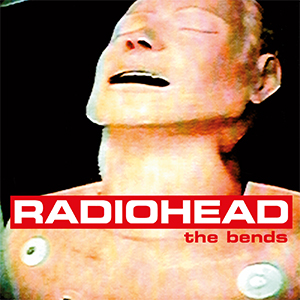
Album cover for Radiohead's "The Bends"

I spent this week with Radiohead’s second album “The Bends” from 1995. This album came out when my senior year of high school was coming to a close. It seems like I heard the song “High and Dry” a bit, but I don’t recall being too aware of this album until the following year. Several of the songs, especially “Just” and “Fake Plastic Trees” became part of the regular soundtrack of my life. It wasn’t so much my choice, though I did love the song. Both Mtv and my friends played “Fake Plastic Trees” with some frequency. Somehow, I managed to not get to know much of this album until this week.

It’s funny how you don’t realize how “of its time” some recordings can be until you listen to them a couple decades later. This album is definitely within the 90s guitar alt-rock genre. Listening to this album made me really realize how influential the Pixies had been on the sound of 90s alternative. I found this especially noticeable in the way the bass is used in these songs. There will be louder sections with drums, guitars, bass, vocals, etc.. and then these will pull back for quieter sections with crispy bass guitar grooves. Anyway…

The song I most know from this album is undoubtedly “Fake Plastic Trees”. In the video, you’ll see singer Thom Yorke riding around the grocery store in the shopping cart. I guess this was just a thing in the 90s, as Jarvis Cocker did it the year before in Pulp’s video for “Common People.” I know there were others, but all I can remember now is an early publicity shot of Marilyn Manson.

Thom Yorke’s quietly strummed acoustic guitar opens the song. Yorke sings sonorously, wet with deep reverb. The lyrics deal with capitalism and artificiality in contemporary society and culture. A sense of humor runs through the lyrics, while they express an emotional mix of disillusionment, emptiness and longing.

A green plastic watering can
For a fake Chinese rubber plant
In the fake plastic earth
That she bought from a rubber man
In a town full of rubber plans
To get rid of itself

The first chorus repeats the line “It wears her out.” This gets modified to “It wears him out.” in the second chorus and finally “It wears me out” for the third and final verse. I like this use of the chorus as a refrain for verses, altered slightly to match the subject of the verse.

The personal turn the songs takes for the final verse, comes even more raw at the end. Yorke closes “Fake Plastic Trees” wistfully singing “If I could be who you wanted all the time.” This reminds me of the chorus “You’re so fuckin’ special; I wish I was special” in their song “Creep.” He gritted his teeth to sardonically deliver that line in the earlier song, spitting it out more as an insult. But in “Fake Plastic Trees” the line comes out as a painful apology for not being enough.

I came to really enjoy the song “Bones,” which follows “Fake Plastic Trees” on the album. It’s probably the most rock n’ roll track. I really like the use of deep tremolo on the overdriven guitar. With each strum in each verse, they drop the speed of the effect as the chord naturally fades out. They disable the effect for chorus. Still, I’ve found with the Rolling Stones and now Radiohead that I really enjoy guitars through tremolo and rotating speaker. It’s particularly exciting when the rhythm of the strumming is in a fight against the tremolo. This can be heard in “Bones” just before each chorus when they they have the speed up.

My favorite track on the album remains “Just.” The song opens with a particularly 90s acoustic guitar riff, much like we would hear later the same year from Oasis. This style of rhythmic strumming was heard a lot during the decade, probably coming from the Pixies and Boston by way of Nirvana.  Radiohead crafted an excellent song here, but what really gets me is the bridge starting halfway into the song. At about 2:28, we hear electric guitar draw the song back in with string noise through tremolo! I would argue that the bridge of “Just” unusually includes another chorus. This comes to a tense climax when Greenwood’s frantically picked ascending lead guitar peaks.. holding a distorted note threatened by impending feedback. The other instruments pull back giving a floating weightless feeling to the moment. Just before feedback overrides the note, Greenwood slides it back and mutes the guitar. A clean guitar brings back the beat of the song with staccato pronunciations. The the band slams us with one last chorus before closing the song by sudden cutting out.

Prince and the Revolution’s “Purple Rain”

Prince Purple Rain album cover

This week, I’ve been listening to Prince and the Revolution’s album “Purple Rain” from 1984. As a listener, I know few albums more than this one. I was seven years old when it came out; My teenage aunt was a big fan and I really got into Prince through her. About this time, I told her that I wanted to grow up to be a rock star like Prince or Michael Jackson. that I wanted My mom bought the record and I recall I was NOT allowed to listen to “Darling Nikki.” That’s the song that pushed Tipper Gore to start the PMRC, which lead to the Parental Advisory stickers on albums.

About five months ago, I spent time with “Sign O’ The Times” and I was not particularly impressed. Many authoritative voices praise “Sign O’ The Times” higher than “Purple Rain” and I absolutely disagree. “Purple Rain” is a wholly conceived and beautifully performed and recorded funk pop-rock album. Even though this album has been endless played and has influenced so much that came after, it still maintains a fresh sense of risky inventiveness and stellar musicianship across the board. 

I like to choose three songs from each album to look at specifically; this was not an easy task for “Purple Rain,” but ‘et’s get to it.

The seventh track “I would Die 4 U” opens with a high note, presumably on bass guitar. This leads to a pulsating synth line that plays the rhythmic role often assumed by the hi-hat, giving the song a 16th note disco feel. I believe this is also doubled by a hi-hat sound (likely from Prince’s favorite drum machine, the LM-1). This keeps a gentle sense of urgency throughout the song, only broken for a few seconds before the coda. The lines of “I would Die 4 U” become a chant towards the end, especially during live performances.

As good as the music is, the lyrics are daring and unusual. On one hand, the song comes across as a love song, with a chorus repeating, “I would die for you, Darling, if you want me to.” However, this idea of being so devoted to a lover that you would sacrifice your own life is paralleled with images of Jesus Christ. He opens the song with the memorable, “I’m not a woman; I’m not a man; I am something that you’ll never understand.” An fitting line from a man whose androgynous personality was amplified for the stage, making many 80s parents uncomfortable. 

Then later, he explains that’s not “your lover” or “your friend,” but rather “your messiah and you’re the reason why.” It’s difficult to say if Prince is proclaiming himself to be a messiah, saying that his sense of devotion in love is like that of a messiah, or speaking from the perspective of a love-god concept. This ambiguity leaves the song open to multiple interesting interpretations, but the subject matter begs interpretation. I don’t think he means this in a martyr sort of why, but rather the speaker is the listener’s messiah, because the listener is worthy of a messiah. Or as he says later on, “All I really need is to know that you believe.”

The hit song “When Doves Cry” remained in the number 1 spot for 5 weeks becoming the top-selling single of the year. This song, too, is full of unusual lyrics for a pop song; again with a thread of ambiguity. The verses dream of idyllic love between the speaker and the listener; in contrast, the chorus speak of how they fight. But look at how they conflicts are addressed: the speaker assumes responsibility and looks for answers in their upbringing:

How can you just leave me standing?
Alone in a world that’s so cold.
Maybe I’m just too demanding.
Maybe I’m just like my father: too bold.
Maybe you’re just like my mother:
She’s never satisfied.
Why do we scream at each other?
This is what it sounds like
When doves cry.

The album closes with its title track “Purple Rain.”  The song combines stylistic elements of rock, gospel, soul, and blues. It carries the audience along at a slow tempo: just under one beat per second. To simplify it, the chord progression is a I-vi-V-IV (coincidentally the first four chords of a circle-of-fifths progression). From what I’ve found online, it’s a little more like a I9-vi7-V-IV (or more precisely Iadd9-vi7add11-V-IV)

As we also know, the song bears a resemblance to Journey’s “Faithfully” which had an earlier release date. I do not know if it is certain if Prince drew inspiration from “Faithfully” or it was a coincidence; apparently Prince was a fan of Journey guitarist Neil Schon and called Journey to get their OK due to the similarity.  The songs share the I-vi-V-IV chord and similar endings.

In my twenties, I also did a lot of home recordings using a Tascam portastudio. I frequently found my way of thinking about starting and ending albums resembled the construction of this album. The song “Purple Rain” launches into a heartbreakingly affirming solo full of atmosphere and then drifts off into lingering strings. And this closes the album. I’ve always felt that was so perfectly beautiful and effective.

The Doors’ “The Doors”

Album cover for The Doors' self-titled debut album

I’ve been listening to the Doors‘ 1967 self-titled debut album this week. My real introduction to the Doors came around 1992 from the soundtrack to Oliver Stone’s biopic.  Around the same time, I saw a documentary about Andy Warhol that introduced me to Velvet Underground. Their song “Heroin” was also featured on the soundtrack.  As a high school freshman, I found great inspirations for creativity. Among those were Warhol and Morrison.

I soon read Jerry Hopkin‘s biography of Jim Morrison, “No One Here Gets Out Alive.” It was years before I actually saw The Doors movie. Of course, I enjoyed it, but it wasn’t as good as Hopkin’s book. The teenage poetry scrawled in my notebooks became slightly less self-centered as I tried for more mystical universal themes. My dreams of going to film school were inspired by Jim Morrison, Stanley Kubrick, and William S. Burroughs. I didn’t really hear much of the Doors beyond what was featured on the soundtrack, but listened to it over and over again. It was years before I actually saw the movie and I didn’t like it as much as Hopkin’s book.  From the soundtrack, I was enamored with “Ghost Song“, “Riders on the Storm“, “Love Street“, “When the Music’s Over“, and especially “The End.” This was rock music tinged with otherworldly exoticism fronted by an intelligent poet who exuded a heady sense of danger.

I finally acquired a copy the Best of the Doors compilation album in my early 20s. At some point, I lost appreciation for Jim Morrison and the Doors and so managed to miss out on some tracks on this debut album.  I laugh to realize now how into them I was without having ever owned proper album.

“Soul Kitchen” is one of the most Doors sounding Doors songs. It features many stylistic elements found in their songs, as well as some of the better lyrics on this album. Morrison, considering himself a poet,often follows strict rhyme schemes. I can’t say the results are always good. I think their hit song “Light My Fire” has terrible lyrics, though Morrison’s not to blame here, as guitarist Robby Krieger wrote them.

The song opens with organ playing a riff that emphasizes the 1st, 2nd beats, and then dances with syncopation across the 3rd. It’s very similar to the organ in their later song “When the Music’s Over” which is also one of my favorites. The bassline bounces down and up from the 1st and 3rd beats of each measure. Drums join in, playing a standard 8 beat rock rhythm with guitar adding some bluesy rhythm riffs.

The Doors did not have a bass-player, but rather organist
Ray Manzarek played a bass synthesizer with his left-hand. This is often how pianists play, with the left-hand providing bass-lines and the right-hand play chords and/or melodies. What’s unique about Manzarek’s playing, though, is that the bass is a separate instruments and he often maintains a separate personality for each. He provides more soul-funk basslines, claiming Ray Charles as a big influence. However, the right-hand plays a variety of styles, often combining influences from blues, classical, jazz, and even middle-eastern music.

I could write a whole thing on just this song and the lyrics of most of the tracks. So, I will not do that, but I do want to point out one of my favorite verses, which is from “Soul Kitchen.”  The second verse. The four lines are two couplets of perfect rhymes, which in turn are slant rhymes with each other. The first line speaks of the fingers of the owner of the soul kitchen, describing their movements as if weaving minarets. Not a word frequently found in rock lyrics, minarets are skinny towers from which the call to prayers are made. Beautifully ornate Arabic lettering frequently covers these towers and their accompanying mosques. It’s possible that Morrison’s “secret alphabets” is both a reference Arabic calligraphy as well as suggestion that there is a covert shared conversation with the owner.

Well, your fingers weave quick minarets
Speak in secret alphabets
I light another cigarette
Learn to forget, learn to forget

This album closes with one of the Door’s more infamous track,s “The End.” The band also frequently ended concerts with the song. It begins as a goodbye to a lover with “This is the end, beautiful friend […] Of our elaborate plans, the end. Of everything that stands, the end. No safety or surprise, the end. I’ll never look into your eyes again.”

Then, from there, Morrison and the Doors take us on a mystical journey along the California highways. But the journey becomes increasingly sinister, like the boat ride in Willy Wonka & the Chocolate Factory.  Until in a fairly similar way, the singer speaks for the listener, “Driver, where you taking us?” This takes us to the Oedipus section of the song. Morrison is known to have been involved in a school production of Oedipus Rex, and the Fruedian idea of Oedipus Rex was still widely discussed at the time. Apparently Morrison tied some additional ideas to the “Kill the father, fuck the mother.” He saw this as a metaphor for doing away what from the past was holding us back, and returning to embracing nature and the Earth. 

The killer awoke before dawn
He put his boots on
He took a face from the ancient gallery
And he walked on down the hall
He went into the room where his sister lived, and then he…
Paid a visit to his brother, and then he…
He walked on down the hall, and
And he came to a door
And he looked inside
“Father?”
“Yes, son?”
“I want to kill you. Mother? I want to…”

While he does censor himself during this section, he chants “fuck” several times throughout the song otherwise like a rhythmic punctuation. It manages, however, to make this section so much more dark and sinister that he leaves out the verbs for bad things the killer does. Much the way good horror films like 1968’s “Rosemary’s Baby” lets the more disturbing imagery happen in the imagination rather than on the screen.

I’ll jump back now from the last song on the album to the third, “The Crystal Ship.” This beautiful song  of lost love allows Morrison’s voice to lean a little more towards his crooning. I know that he idolized Elvis Presley, but I learned this week that he also felt the same for Frank Sinatra. This track does combine some elements of both of those singer’s slowerly songs.

As with many albums of the time, the Doors’ self-titled album has hard-panned instruments either all left or all right. Thankfully, unlike the Beatles’ “Rubber Soul“, this keeps vocals in the center, and often another instruments like piano to join. This means there are three positions in the stereo field utilized. Unfortunately, the Doors seemed to have been recorded with greater isolation than the Beatles, so those instruments that are hard left or hard right feel extremely unnatural in headphones.

I’m glad to have spent a full week with this album, I’ve come to love the Doors again. Also, it was good to really hear all of these songs enough times to get to know them. Great stuff, the Doors.

The Rolling Stones’ “Beggars Banquet”

Rolling Stones' Beggars Banquet album cover

This week, I’ve been listening to The Rolling Stones album “Beggars Banquet” from 1968. This is the third of their albums I’ve had for my weekly albums. “Exile on Main Street” and “Let It Bleed” each had their turn earlier this year. As I mentioned before, I chose the Beatles over the Stones when I was young. However, I feel for “Exile on Main Street” pretty hard when I was about 30 years old. There’s some tremendous cuts on “Beggars Banquet” as well. I’ve heard several of them over the  years, especially “Sympathy for the Devil.” But now some of the whole album has grown on me and some of these songs are now great favorites.

The famously controversial cover image of a bathroom wall, includes some graffiti that says, among other things “Bob Dylans Dream” with an arrow pointing to the toilet handle. I wonder if this is a joke on Dylan’s line “the pump don’t work, because the vandals took the handle” that closes his song “Subterranean Homesick Blues.” Either way, the mention of Dylan is importantly telling; These Rolling Stones songs frequently offer snapshots of contemporary society and culture in a rather Dylan way. Also, musically the way they strum the acoustic guitar in some of these songs shows that they’ve been listening to some of this recordings.

“Jigsaw Puzzle” provides a more obvious example of Dylan’s influence on the Stones. Acoustic guitar strums repeats a V-IV-II-I chord progression four times for the verse, and then plays I-II-IV-V-V-IV-IV-V for each chorus. A bright slide-guitar manically slides up the neck mimicking the slide guitar in Dylan’s song “Highway 61 Revisited.

I enjoy how they play these verses. All instruments except drums and bass rest during the first line, and then each guitar comes back in as the verse progresses to the chorus. This gives the feeling of rising intensity. In this way, also, they treat the chorus more as a refrain in the balladry tradition than as a rock n roll chorus. Though the lines incorporate some rhyme, they don’t follow a strict rhyme scheme as Dylan would; They frequently abandon rhyme altogether.

The lyrics paint short vignettes of characters walking about in the world of the song, as often seen in Dylan songs, especially “Desolation Row.”  There’s the story of so many things going on in the world: issues, conflicts, corruptions, etc.  These are vague passing references to the sociopolitical climate, like skimming newspaper headlines when you just want to read the comics. The speaker is cut-off from these other characters and their interactions with each other. He’s just “trying to do [his] jigsaw puzzle.” However, though they incorporate some rhyme, 

There’s a tramp sitting on my doorstep
Trying to waste his time
With his methylated sandwich
He’s a walking clothesline
And here comes the bishop’s daughter
On the other side
She looks a trifle jealous
She’s been an outcast all her life
Me, I’m waiting so patiently
Lying on the floor
I’m just trying to do my jigsaw puzzle
Before it rains anymore

The Rolling Stones’ “Sympathy for the Devil” remains one of the most undeniable recordings of the 1960s. In addition to the amazing music and performance, the song features great lyrics about the evil running through history and culture. This week, I also watch the not-so-good documentary by Godard, “Sympathy for the Devil” which follows the band through the development of the song. I can’t recommend the movie, but it was neat to see them recording early versions of the song before they knew how they were going to play it.

The verses follow I-II-IV-I chord progression. The choruses rises up to V-I-V-I.  For the first verse, the piano plays chords on the first beat of each measure, along with the bass playing the root note. With the second verse, the bass picks up more of a driving shuffling rhythm, still mostly on the root note of each chord. With each verse, the piano gets more active with great rhythm-and-blues rhythms. This is all accompanied by layers of Latin rhythms played with a variety of hand percussion. 

After the second chorus, vocals repeating a “hoo-hoo” chant continue through the rest of the song. These backing vocals sing the tonic chord I throughout the verses. They change only for the chorus, rising up to the V chord along with the rest of the accompaniment. I’m not really sure why, but this chant contributes to the driving feel of the song.

A menacingly sharp electric guitar solo plays during after the third chorus. This overdubbed guitar sits right in front, fuzzed and bright. While it’s definitely a blues-inspired solo, it mixes held notes with staccato stops. With the lack of reverb or delay, the rests are hard and just as cutting as when the guitar plays notes. 

“Street Fighting Man” may be the song I played the most this week. It makes uses of the typical three rock chords, though the order is sort of flipped for the verses. Normally we’d see a I-IV progression, but instead these verses have IV-IV-IV-I, even though the intro gives us I-IV. The chorus changes key to the V of the original key for a I-I-I-V chord progression in the new key. These leads to a post-chorus that rather-floats on the II chord (V of the new key) of the original key to drop back to the original key.

The song opens with Keith banging out the chords on an acoustic guitar in one channel. He famously acquired the sound by recording the guitar on a portable tape cassette recorder.  The guitar was too loud for the little machine, overloading the mic input, the tape, or probably both. This serendipitously created a warmly distorted acoustic guitar. This is joined by a more cleanly recorded acoustic guitar in the left channel. There’s later some great subtle play back and forth between these two guitars.

The drums play a strong simple beat, emphasizing the 2nd and 4th beat like a march to accompany lines like the opening “Everywhere I hear the sound of marching charging feet, boy.” The verse and choruses are rocking, hard, and driving. They create this force with double-tracked acoustic guitars, hard-driving drums, rolling piano, and a simple-yet-effective bass guitar line. The post-chorus adds contrast with sitar and syncopated melodic piano creating a floating feeling, as the song finds its way back to the tonic.

Well now, what can a poor boy do
Except to sing for a rock n’ roll band?
‘Cause in sleepy London town
There’s just no place for a street fighting man, no.

EDIT: Updated the embedded videos, as ABKCO records just posted some great lyric videos on youtube.