Prince’s “Sign ‘☮’ the Times”

Prince's Sign O The Times album coverI’ve been listening to Prince’s 1987 Double LP “Sign ‘O’ The Times” for the past seven days. I devote each week to a different great album in order to learn as a songwriting musician. It also exposes me to a lot of great music. When “Purple Rain” came out when I was seven years old and I’ve been a fan ever since. Still, this week was really my introduction to “Sign ‘O’ The Times” which I’ve mostly ignored until now.

Despite some incredible high points, I found the album on a whole to be underwhelming. Some of that may be the expectation that it was going to be better than other Prince albums, due to collective critical acclaim. I just don’t think it is. I feel like much of it sounds like interesting song ideas and experiments that need more work. However, the album carries several great songs that I will definitely come back to.

The second track “Play in the Sunshine” was the first to get my attention. This upbeat track combines dance music with psychedelic pop. The chord progression is mostly I-I7-IV-IV7 repeated with a break between verses. The live percussions helps this track stand out. We can hear Prince’s favorite Linn LM-1 all over this album. His expert use of this machine leads to innovative and distinctive patterns; unfortunately he doesn’t incorporate enough variation within the tracks. “Play in the Sunshine” provides a great exception Even though the song only has a 100 BPM temp, the energy feels like much more. The use of the snare outside of the typical 2nd and 4th beat contribute to this.

There’s a sparse layering of instruments. Drums and bass play almost constantly; there’s a couple of keyboard lines that add effects and melodic color. I love the guitar solo in this song, even though it has little more than style. There seems to be a mixture of light flange with heavy distortion as he plays and bends screaming notes, adding a little wah towards the end.

Housequake” sounds like Prince had fun, but the fun didn’t last over repeated listening for me. There’s some great use of James Brown influence on the track. I really hear it in the funky clean guitar riffs and the way the real and synth horns are used. I also pick up on some George Clinton Funkadelic influence in the vocals. Especially in the way he’s being goofy and creating a character to encourage people to dance. But where Clinton could keep a repetitive groove going and maintain my attention, “Housequake” just doesn’t do enough with it’s 4 minutes and 42 seconds.

The track “It’s Gonna be a Beautiful Night” more successfully goes for that funk jam party feel. The kick drum hits on every beat for a dance-worthy four-on-the-floor rhythm. With snare and handclaps hitting on the 2nd and 4th beats. Parliament-inspired chants like “We are beautiful, it’s gonna be a beautiful night” encourage audience participation. Another chant repeats the Wicked Witch’s guards “Oh-wee-oh” from The Wizard of Oz. The chant reminds me of the “Oh-wee-oh-wee-oh” of The Time’s “Jungle Love” which was primarily written by Prince. This song manages to keep me engaged and feels like a good time to listen to. The greater use of variety throughout the song is an improvement over “Housequake”. I also suspect that other musicians had great input, which can enrich a song.

Starfish and Coffee” instantly became one of my favorite songs. The song opens with digital piano simply playing the chord progression of I-ii-V-I-vi-ii-V-I. This is based on the Circle Progression which is common turnaround progression in jazz and pop music. Vocal and drums then begin. Prince sings a simple melody that encourages sing-a-long, especially withe use of doubling backing vocals. Swirling synth pads give the song the psychedelic feel that the lyrics ask for. The lyrics are another strong-point for this song. They are narrative and provide a vignette of Cynthia Rose, a colorful unique character in the classroom.

Several moments of this album remind me of how I frequently hear Prince’s influence in the work of Trent Reznor. The track “U Got the Look” could very well be an NIN industrial track if the heavily distorted guitar was brought forward. The track also features a lot of great percussion work, with toms and bongos getting extra attention. Marching-band style rolls add an interesting texture to the track. I also just really love the sound of Prince’s guitar. I believe there’s some light flange or chorus with mixture of overdrive and distortion and a subtle reverb. It’s a great sound.

This album grew on me as the week progressed. I don’t personally agree that it is Prince’s greatest album. To simplify the story, Prince mostly wrote and recorded “Sign ‘O’ The Times” after suddenly firing his band The Revolution. I believe it suffers from being too much of a solo album. Perhaps we can all learn from this. The input of others can improve what we do, even one as incredibly capable as Prince. On the other hand, he’s also experimenting with combining genres and sounds. This experimentation is at times exciting, but sometimes leaves things feeling unfinished raw. Overall, a fantastic album, but not his best.

Led Zeppelin’s IV

Led Zepplin 4 album coverI’ve been listening to Led Zeppelin’s untitled fourth album from 1971. Each week I devote to an acclaimed album to learn as a songwriting musician. As with “Dark Side of the Moon” by Pink Floyd, I grew up hearing this Led Zeppelin album often. I imagine many of us born in the 70s did. Even with all of that exposure, it’s still a great album with surprises.

The fourth track “Stairway to Heaven” pulls together the greatest qualities of the album into one song. As an unfortunate side effect of being one of the greatest songs ever, it has become amazingly overplayed. I sigh with lack of interest when the song starts. My favorite portion of the song starts at after five and a half minutes. First, the guitars signal a transition through a dramatic series of chords sounding like horns. Jimmy Page then provides a fantastic soulful guitar solo. I like that the they did not distort the rhythm guitar to get a rocking sound. They gave it a sense of being big by double-tracking with some strong spring reverb. There, I talked about “Stairway to Heaven” mostly because I’d feel foolish not mentioning it. Seriously, I skipped it many times this week.

Four Sticks” got my attention this time around. I hadn’t given it much attention in the past, so it still had a little sense of novelty. Also, the unusual rhythm of the song intrigued me. Some research revealed that most of the song is in a very unusual 5/8 time, withe some parts in a more common 6/8. I read that the rhythm of the song was so difficult that they almost gave up on recording the song. I hear a few times on the recording that they do slip up as a result. There’s a vaguely middle-eastern feel to the music. This comes from the combination of odd time signature, droning ascending scales, driving percussion, and energetically strummed acoustics. I sometimes find that songs in odd signatures will feel like they drift or ramble, but the 6/8 sections of this song give a sense of journey.

The seventh track “Going to California” is comparable to “Stairway to Heaven” while being much better. I like the collection of acoustic guitars and mandolin creating musical textures through arpeggios. They are panned mostly hard left and right, leaving space in the middle for the bass and vocals. The lyrics are more relatable than the Tolkeinesque-Rumi vagueness that happens on some of the other tracks like “Stairway.” The first verse is a pair of beautifully written narrative couplets. They get the listeners attention immediately through emotional story-telling:

Spent my days with a woman unkind
Smoked my stuff and drank all my wine.
Made up my mind to make a new start
Going To California with an aching in my heart.

Speaking of Tolkein, my other favorite track is “Misty Mountain Hop.” There’s also something unique about the rhythm of this song. The main riff of the song, which is played on both guitar and electric piano, actually starts an 8th note before the first beat of each measure and least for a full quarter. This song provides an a great example of what I first think of as the Led Zeppelin sound. There’s big loud drums, a heavy bass bottom, a blues-inspired hard grooving guitar riff, and Plant’s high-pitched vocals. The narrative lyrics describe a situation, a certain place and time, written with an ear to both blues and high fantasy balladry.

So I’ve learned a bit about the possibilities of mixing time signatures in a song. Their use of mysticism and fantasy elements is most enjoyable for me for telling real-world narrative. In addition, the way that they double-up on instruments to strengthen a riff is very effective. And you can’t deny the power of big drums.

Miles Davis’s “Kind of Blue”

For the past week, I’ve been listening to Miles Davis’s 1959 album “Kind of Blue” for lessons I can learn as a songwriting musician. Though not my first time hearing the album, this week definitely served as an introduction. As the songs are all instrumentals, I have no lyrics to discuss. Yet, the music itself speaks in a different language than I’m accustomed.

This is instrumental jazz instead of the rock and pop that I usually listen to. Furthermore, it presents to me the unfamiliar concept of modal jazz. I avoid giving an explanation here for fear that I get it wrong. The article on Wikipedia gives a basic description. Modal jazz is challenging to me, because I’m accustomed to tonal music. In tonal music, the foundation of a song consists of chord progressions that travel from and return to the tonic chord. As I understand it, modal jazz utilizes modal changes instead of chord progressions. Hack Music Theory has a short video explaining Modes. With modal jazz, Miles Davis gave freedom to the melody by releasing it from constraints of chord progressions. I hope I’m getting this right.

Still, my familiarity with tonal music contributes to “All Blues” being the song I most enjoy. While the songs goes through mode changes, within each the song follows a 12 bar blues chord progression. “All Blue” probably fails to be a true example of modal jazz for this reason. The track is in 6/8 time with the emphasis on the first and fourth eight note. Secondary emphasis on the third and sixth give the rhythm a little hop. A gentle rumbling piano opens the track to be joined by horns. This gives an atmosphere of the train yard in twilight or early morning. The rhythmic hi-hat tapping emphasizes this feeling.

That brings me to how fascinating I find the percussion on this album. It’s almost completely based on the hi-hat. The cymbals are played with great expression to convey rhythm. In rock and pop, the hats are most often used to keep time while the kick and snare convey rhythm. The percussion on “Kind of Blue” gives the hats great importance. The drummer plays the other drums much less often than I’m used to. The snare provides occasional emphasis, to add some flavor or to occasionally signify a change. A brush slides across the surface, the rim is tapped, or light trills provide texture. This greater variety of sounds from the snare really gets my interest.

The opening track “So What” also grabbed my interest. The piano plays “buh-boop” followed by the bass “duh doodoo doodoo doodoo doo doo” introducing the foundation of the song. There’s 16 bars in one mode, then 8 in another, returning to 8 of the first mode. Once this is introduces, a splash of cymbal tells kicks off the real journey. Horns take turns soloing improvisational melodic lines over the rhythm section. As mentioned earlier, the cymbals provide the sense of rhythm. The bass gives a foundation for that rhythm. On the piano, chords are played but they are not the drive of the song. They more provide interesting emphasis and offsets to the rhythm. Sometimes, to my ear, the chords sound strangely wrong, but oddly appropriate. This cool music sounds alien to me. I don’t understand the language, but I can feel it.

I definitely need more than a week with this album to full appreciate it. Its cool smoky night-time feel really gets me. I’m looking forward to more from Miles Davis as well as some of the other musicians on this album. John Coltrane and Cannonball Adderley played the saxophones and Bill Evans played the piano. I already know some of Coltrane’s work. I understand that Bill Evans was a major part of this album’s compositions.  Also Jimmy Cobb played the drums here. I feel that I can learn a lot from his use of drums for my own programming of drum machines. I can learn a lot from this album, especially in the way instruments are being used and interact with each other.  The concept of modal jazz presents a challenge to me which gives me a desire to further understand it.

Pink Floyd’s “Dark Side of the Moon”

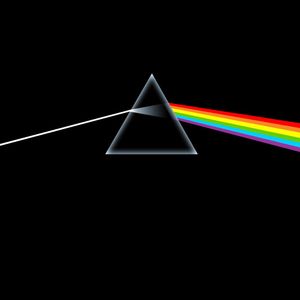
Pink Floyd Dark Side coverI spent a week listening to Pink Floyd’s 1973 album “Dark Side of the Moon” for what I can learn to improve my craft as a songwriting musician. I do this each week with a different album with some recognition as one of the greats. My father enjoyed Pink Floyd so I grew up hearing this album quite a bit. I know all these songs very well. So there wasn’t a lot of discovery happening; this week reminded me what I love about the album.

Experts on such things recommend that songwriters have interesting vocals start during the first 20 seconds. The thinking went that somebody reviewing demos would hit eject if it didn’t get their attention in that time. In today’s world of internet streaming, recommendations include having an attention-getting hook within 7 seconds.

In sharp contrast to that advice, this album opens with 36 seconds of nothing but a faded-in heartbeat. Indeed, the first 7 seconds only provide near silence. Then a variety of sound effects rise into a maddening crescendo, broken by a slow groove with bass, flanged guitar, echoey slide guitar, and electric piano. Sometimes the electric piano and slide guitar meld into each other, losing their identity. It’s eerily dreamy.

I like that the songs of the album flow into each, but each is distinct. With “Dark Side of the Moon,” Pink Floyd crafted a collection of individual songs conceived as whole. This idea of an album had a huge influence on me. Before Trip Gunn, I designed whole albums. I built a structure of songs supporting an overall concept. My albums incorporated a Floydian style of having one song lead into the next. I decided with Trip Gunn that I would focus on writing good songs rather than always trying to make big albums. Not that one is better than the other, I just felt I needed to change the way I was thinking.

One of my favorite songs “Time” has not one, but two intros. That’s not why I like it, but I find it interesting. The track starts with the end of an explosion (from the previous track) and several clock alarm chimes going off at once. The second intro is a long section of long-held bass notes on guitar, rototom rolls, and electric piano. The rototoms, which were a new instrument at the time, add interest to a section that I would otherwise find too long.

After two and a half minutes pass, the actual songs kicks in with vocals and a funky rock accompaniment. A lot is said about Floyd in terms of space and psychedelic rock, but they had a particularly funky side too. The back-and-forth play between instruments in songs like this is particularly interesting. I love making use of this in some of my own songs and would like to do it more often.

Of course, “Eclipse” as well as the track “Brain Damage” that leads directly into it. The song has a gospel feel, thanks largely to the organ and backing female vocals. But also the repeating I-IV7-I-IV7-I-II-V-V7-I chord progression give it a spiritually uplifting feel. Added to this is that the track builds into intensity until reaching the concluding lines “Everything under the sun is in tune, but the sun is eclipsed by the moon.” And the song is over, fade out heartbeat.

Van Morrison’s “Astral Weeks”

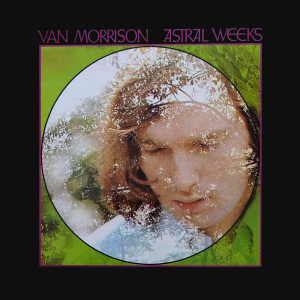
Van Morrison's "Astral Weeks" album coverI’ve been getting to know Van Morrison’s 1968 album “Astral Weeks” for my “To My Ear” project. Each week I listen to an album generally recognized for being great. The goal is to improve my own craft as a songwriting musician; The process also introduces me to some great music. I disliked this album with the first few listens and was really dreading giving it a full seven days. I heard little more than monotonous ramblings over musicians trying to find a song. Gradually, parts of it grew on me. Not only did I experience usual side-effect of familiarity, but my brain had to learn how to process it. I still don’t really like most of the album, but I came to like a few tracks.

The fourth track “Cypress Avenue” closes side one of the record. The music follows something a blues progression played with in a relaxed chamber folk style. The accompaniment consists of upright bass, acoustic guitar, harpsichord, violins, and flute. The violin and flute seem to be languidly improvising throughout the song. Their apparent lack of purpose beyond atmospheric accompaniment give the song a directionless quality shared with the rest of the album. The feeling of sameness makes the already long seven minutes feel like forever. Still, this song has a stronger sense of rhythm than most them. The blues structure helps the lyrics feel less like poetic ramblings.

Those lyrics carry a sense of nostalgia and longing. Their conscious of the distance between the present and the past within the locale. This is a topic that resonates with me strongly and one that I often visit in my own songs already.

The next track, “Like Young Lovers Do, opens the second side. Like, well, the rest of the album, the song flows along in a monotonous way. In this case it’s forgiven because it’s less then four minutes long. The use of strings and horns provides a sense of movement, especially at the close of each chorus. In fact, these instruments make the chorus feel like the chorus. It’s overall a nice little song. Though, honestly, it may largely benefit from sounding different than the rest of the album.

The next track Madame George consisting stood out as my favorite all week. It was the first to catch my attention. Even after listening to the whole album multiple times, none of them had the same grand sense of purpose and heart as “Madame George.” The lyrics provide enough narrative to draw the listener in, but enough ample room for questions and interpretation. “Madame George” is a seriously good song, even when not considering how boring the rest of the album can be.

Before I get into discussing this one track, let me say that I feel like I’m missing something by not appreciating the rest of the album. Maybe spending more time with it would help. However, my goal here is to improve my songwriting. I feel that a good song gets better with repeat listening; I’m not so sure that it should take more than a week of repeated listening to appreciate a song. I spent a full week with this album and only one song truly grabbed me.

The chords of “Madame George” repeat a standard I-IV-V progression throughout. The bass provides rhythmic movement. The percussion remains silent until the very end of the song a little high-hat picks up the pace of the outro. I’ve learned this option from a few other albums I’ve listened to: have the bass serve the rhythmic purpose usually the responsibility of percussion. Chords strummed on a quiet acoustic guitar add rhythmic texture to the accompaniment. In this case it bounces across the song emphasizing the chord changes.

Over this surprisingly engaging music, Morrison sings well-written nostalgic lyrics about a final meeting (or is it George) and departure. Van Morrison leaves a lot open to interpretation. Who or what is Madame Joy and why is the speaker meeting with Madame Joy? Why is she so concerned with the potential arrival of the cops? Why is the speaker leaving on the train and why meet up with Madame Joy before leaving? Even so, it’s more about emotion than details and backstory. Each verse, a heart-captured snapshot of an event. Of this ten minute song, I do feel like the last four minutes are unnecessary. Though this may represent the speaker riding away on the train, it extends the song past the story.

I love all of the lyrics, but the fourth is my favorite today

And then from outside the frosty window raps.
She jumps up and says, “Lord, have mercy I think it’s the cops,”
And immediately drops everything she gots
Down into the street below;
And you know you gotta go
On that train from Dublin up to Sandy Row,
Throwing pennies at the bridges down below.
And the rain, hail, sleet, and snow
Say goodbye to Madame Joy

I like that the startled reaction of Madame Joy gives a glimpse into her personality and lifestyle. The frosty window gives some indication what time of year it may be. We also learn that Madame Joy lives in Dublin and the speaker is taking the train to Sandy Row, which is in Belfast. The song started “down on Cyprus Avenue”, which is also in Belfast. I used Google Maps to figure this out. I get the feeling that the speaker is on Cyprus Avenue and gets hit with memories of Madame Joy, whom he goes to visit in Dublin. The visit isn’t all wonderful, and then heads back home on the train. So this verse helps put more of the story into perspective.

I also like that Madame Joy’s action of “dropping everything she gots down into the street below” will be echoed by the speakers “throwing pennies at the bridges down below” on the train ride. He pictures the “rain, hail, sleet, and snow” saying “goodbye to Madame Joy” which are all forms of precipitation like tears. While the song ends with several reminders to “dry your eyes for Madame Joy.” It’s a great song the way these things reveal themselves upon repeat listenings.

I wish I’d found the rest of the album so rewarding. I will definitely revisit, but I’m taking a break for a while from Van Morrison.

David Bowie’s “Hunky Dory”

David Bowie Hunk Dory album coverThis week, I’ve been listening to David Bowie’s 1971 LP “Hunky Dory” for what I can learn as a songwriting musician. This was Bowie’s fourth album and my second for this “To My Ear” project after “Ziggy Stardust” about a month ago. I’m doing it backwards, I suppose. “Hunky Dory” came out about 7 months before “Ziggy Stardust” and a line of artist progress runs between the them. Sometimes, I feel this album shows Bowie as an actor seeking a role, which he later finds in Ziggy Stardust.

The album opens with “Changes” which immediately hits me with the same sense of theatrical found on “Ziggy Stardust.” I love this about both albums: they as much about music as they are performance. The peculiar first verse hints at the idea of Bowie as the actor in search of something.   In the first verse, the performer reflects and almost confesses. “So I turned myself to face me, but I’ve never caught a glimpse how the others must see the faker.”

Musically, I love the dynamic difference between the verses and choruses of “Changes”. Bowie sings the verses gently over a quiet accompaniment of piano, bass guitar, and strings with no percussion. It’s theatrical with the lights down low. Then drums march along during the chorus which has more of a 50s rock n roll feel with a bit of boogie-woogie.

Life On Mars” is the best track on the album. The chord progression originated from a french song, “Comme d’habitude” which was also rewritten with English lyrics as “My Way” by Paul Anka. As much as I like the Sinatra song, especially the Sid Vicious cover, I believe “Life in Mars” is a superior song.

The lyrics tell the story of “the girl with the mousy hair” who is to meet her friend at the movies to escape her unhappy mundane life at home. However, her friend doesn’t show up and “the film is a saddening bore”. What isn’t much different than her own dull life is something she’s already seen in countless other movies. The titular line “Is there life on Mars?” is a cry for something more than Earth has to offer. Bowie performs the song over cinematic accompaniment that opens with beautifully played piano, that dances like a snow-globe ballerina. I love that the song begins with a single note that rings for a full second. Strings play majestically with the first chorus. It’s overall a beautiful song that demonstrates fully the principal of elevating the mundane.

One of my other favorite tracks is “The Bewlay Brothers” because of it’s sense of memory, love, and loss. The fairly basic accompaniment mostly consists of piano, acoustic guitars, and watery electric guitar. The lyrics begin with the word “and” relaying the story in third-person perspective, “And so the story goes they wore the clothes; They said the things to make it seem improbable: Whale of a lie like they hope it was.” Then with later verses, Bowie switches to first-person perspective. It does not seem that the characters change, only the perspective.

The endearing song feels like it tells the overall story of two brothers lives together. Lines of the song share emotionally-charged snapshots of moments in their lives.  The general feeling is that those times are in the past and they cannot return. The repeated final line calls out to leave current circumstances and live like they used to: “Just for the day, Please come away.”

Fleetwood Mac’s “Rumours”

Fleetwood Mac's "Rumours" album coverI spent the past week listening to Fleetwood Mac‘s 1977 album “Rumours” which is considered by many to be one of the greatest ever. Before I get into that, let’s go back to my childhood again. This album came out two weeks before my birth. Radio played the singles with heavy rotation during my first few years. My family bought a CD player in 1985 and we soon acquired this album on CD. I grew up hearing this album, but I haven’t listened to it much on my own until this week. What did I learn from this album to improve my own craft as a songwriting musician?

One of the best-selling albums of all time, Fleetwood Mac’s “Rumours” stands as a quintessential example of mid-late 1970s soft rock. This album is well-crafted and immaculately produced to a fault. I find the sound so likeable and easy to enjoy that it becomes unbearably pleasant. I hesitate to say there’s not enough risks taken, because much of the music is very inventive. It even feels odd to complain that the album is too good. It feels so awfully like it aims to please, which is often at the cost of sincerity.

However, these are not lyrically happy or pleasant songs. Feelings of heartache, listlessness, lost love, emptiness, and pain run throughout the album. This comes as no surprise considering the atmosphere they wrote and recorded the songs in; Two of the band members were going through a divorce (from each other), two other band members were in the process of breaking up, and another was divorcing his wife. We can hear the band members speaking to each other about these situations through the songs. The strong songwriting, musically and lyrically, shines through the pleasant soft rock feel making the album worthwhile.

My favorite track on the album is “Dreams“, which was written and sung by Stevie Nicks. At 12 years old, I recorded a song with a chorus of “Once you’ve been and once you go”;  Only years later did I realize that they mimicked Stevie’s “what you had and what you lost”. In addition to her songwriting, Stevie’s amazing voice makes this song stand out. I think they would’ve done better if she sang lead on more tracks.

The song is in Am at a moderate tempo of about 115 BPM. Interestingly, most of the song plays through a VI7-VII (F-G) chord progression. They touch the tonic Am chord only briefly during the guitar solo. I like that this keeps the song feeling like it never really resolves, but when it almost does it feel particularly sad because it does so with a minor chord.

Christine McVie track “Songbird” feels like Joni Mitchell lite, but I like it. Part of the attraction may be that it is a break from the soft rock. I don’t think much of the lyrics, though I like the titular line “And the songbirds keep singing, like they know the score.” The accompaniment follows a I-IV chord progression, with some ii and vii during the second half of the verses.

Second Hand News” does a great job of opening the album. Full of the breezy production of “Rumours”, but also with a good driving rhythm.  It feels like rolling down the windows and driving in the country on a nice summer day.  In contrast, the first two lines fittingly introduce the album: “I know there’s nothing to say; Someone has taken my place.” It’s strange to think how the words are directed at Stevie Nicks, but she’s singing backing vocals.  The verses about the breakup end with some uncouth lines “Won’t you lay me down in tall grass and let me do my stuff.” Lindsey delivers the lines enjoyable making the listener want to sing along. Then go into the catchy, but decidedly meaningless, chorus of “bow bow bow buh bow bam bow”.

Slate ran an article a few years ago with the subtitle of “Why is Fleetwood Mac the least influential great band ever?”  I don’t know their answer, but I agree with the question. While these songs are all well written, well performed, and immaculately produced, they fail to inspire me as a songwriting musician.  The whole album is good, but it doesn’t excite me.*

* Update (May 22, 2018). I may have to retract my original statement about not being inspired by this album.  So much of what happens on this album musically and lyrically keeps coming back to me, and I’m finding its influence appearing in some songs I’m writing now.

Bob Dylan’s “Blonde on Blonde”

Blonde on Blonde album cover.This week, I’ve been listening to Bob Dylan‘s 1966 double LP “Blonde on Blonde” for what I can learn as a songwriting musician. I listened to Bob Dylan’s earlier “Highway 61 Revisited” for this project about two months ago. That has long been one of my favorite albums, but “Blonde on Blonde” was mostly new to me. Overall, Dylan got even better in the year between the two. The writing and performance are more focused and less chaotic. In its entirety, this double LP is remarkable with incredible high points. Some songs could stand to be cut to create a fantastic single LP album.

The album opens with perhaps the weakest song, Rainy Day Women #12 & 35. I like the raucous marching circus accompaniment; Still, the lyrics are really too silly to justify four and half minutes. No matter what interpretation you read into the song, yhe “Everybody must get stoned” pun doesn’t deserve this much celebration. I’ll also skip by “Pledging My Time“, a blues track that fails to grab my attention.

My absolute favorite song on “Blonde on Blonde” is Visions of Johanna. The accompaniment is primarily an acoustic guitar strumming a chord progression mostly based on I-IV-V7. The mid-section of each verse builds some suspense by repeating I-IV. A V7-I cadence closes each verse. Wistful lines of sustained notes are played on an organ in the right channel balanced by a twangy guitar’s occasional noodling on the left channel. A bass guitar in the center plays jugband bass-lines travelling the across chords. Dylan’s carries more emotion than typically heard on other songs; This is appropriate considering the subject matter, ambiguous as it may be.

The lyrics of “Visions of Johanna” made it quickly my favorite. It’s not particularly clear who or what Johanna is and if the “visions of Johanna” are memories, fantasies, or something else. Whatever they are, the speaker is uncomfortably haunted by the visions; they add a tinge of sadness to real experiences in the present. In a way, the visions “that kept me up past the dawn” remind me of Poe’s raven that visited “upon a midnight dreary.”

There are two female characters: the Johanna who is “not here” and Louise who is. There are several apparent male characters: the speaker in first person, Louise’s lover, the night watchman, the little boy lost, the peddler, and the fiddler. I wonder if all of these male characters are different aspects of the same person. Even Louise can act as a mirror forcing the speaker to look back within himself. Within that mirror the speaker sees himself replaced by the ever present visions of Johanna.

Louise, she’s all right, she’s just near
She’s delicate and seems like the mirror
But she just makes it all too concise and too clear
That Johanna’s not here
The ghost of ’lectricity howls in the bones of her face
Where these visions of Johanna have now taken my place

Another song I love, “I Want You” feels more like walking alone passing through various scenes. The chorus is a straight-forward “I want you, I want you, I want you so bad”. I read somewhere that often in songwriting, the chorus provides the lens through which to interpret the verses and that’s definitely the case here. This simple chorus also provides a nice contrast to the verses in which so much happens. In all that the speaker sees and encounters, the desire for subject of the song. I actually first heard this song as covered by Sophie B Hawkins when I was 15. Here version brings out the feelings of longing and hurt more than Dylan’s, but I think both are excellent. I especially like the motif played on a clean electric guitar that plays throughout the verses of the Dylan recording.

I continue to find Dylan an amazing lyricist and I’m really appreciating his use of traditional chord progressions and instrumentation. About 10 years, I was concerned about using too many common chord progressions and basic chords. I thought of this as a weakness and that chord progressions were an area where being unusual and creative were a measurement for quality songwriting. When I started writing songs for Trip Gunn, I threw out this assumption. Many amazing songs have been written on little more than I-IV-V progressions.  Variety is good, but there’s nothing wrong with the familiar.

What I learn as a songwriter from Dylan on “Blonde on Blonde” is much the same as “Highway 61 Revisited” and that includes the lesson that it’s beneficial for instruments to be in conversation with each other. The difference is that on the earlier album the individual instruments were often playing independent of each other and on this album they are working together. While the lyrics on “Highway 61” are often more inventive than they are here, there’s a greater sense of meaning and expression on “Blonde on Blonde.” There rhymes also feel more natural this time around. I like the use of imagery and setting of scenes on this album.

Unfortunately, the album versions of these songs are not available on YouTube, but I’ve provided links to decent versions that are similar. Most are live.