Miles Davis’s “Kind of Blue”

For the past week, I’ve been listening to Miles Davis’s 1959 album “Kind of Blue” for lessons I can learn as a songwriting musician. Though not my first time hearing the album, this week definitely served as an introduction. As the songs are all instrumentals, I have no lyrics to discuss. Yet, the music itself speaks in a different language than I’m accustomed.

This is instrumental jazz instead of the rock and pop that I usually listen to. Furthermore, it presents to me the unfamiliar concept of modal jazz. I avoid giving an explanation here for fear that I get it wrong. The article on Wikipedia gives a basic description. Modal jazz is challenging to me, because I’m accustomed to tonal music. In tonal music, the foundation of a song consists of chord progressions that travel from and return to the tonic chord. As I understand it, modal jazz utilizes modal changes instead of chord progressions. Hack Music Theory has a short video explaining Modes. With modal jazz, Miles Davis gave freedom to the melody by releasing it from constraints of chord progressions. I hope I’m getting this right.

Still, my familiarity with tonal music contributes to “All Blues” being the song I most enjoy. While the songs goes through mode changes, within each the song follows a 12 bar blues chord progression. “All Blue” probably fails to be a true example of modal jazz for this reason. The track is in 6/8 time with the emphasis on the first and fourth eight note. Secondary emphasis on the third and sixth give the rhythm a little hop. A gentle rumbling piano opens the track to be joined by horns. This gives an atmosphere of the train yard in twilight or early morning. The rhythmic hi-hat tapping emphasizes this feeling.

That brings me to how fascinating I find the percussion on this album. It’s almost completely based on the hi-hat. The cymbals are played with great expression to convey rhythm. In rock and pop, the hats are most often used to keep time while the kick and snare convey rhythm. The percussion on “Kind of Blue” gives the hats great importance. The drummer plays the other drums much less often than I’m used to. The snare provides occasional emphasis, to add some flavor or to occasionally signify a change. A brush slides across the surface, the rim is tapped, or light trills provide texture. This greater variety of sounds from the snare really gets my interest.

The opening track “So What” also grabbed my interest. The piano plays “buh-boop” followed by the bass “duh doodoo doodoo doodoo doo doo” introducing the foundation of the song. There’s 16 bars in one mode, then 8 in another, returning to 8 of the first mode. Once this is introduces, a splash of cymbal tells kicks off the real journey. Horns take turns soloing improvisational melodic lines over the rhythm section. As mentioned earlier, the cymbals provide the sense of rhythm. The bass gives a foundation for that rhythm. On the piano, chords are played but they are not the drive of the song. They more provide interesting emphasis and offsets to the rhythm. Sometimes, to my ear, the chords sound strangely wrong, but oddly appropriate. This cool music sounds alien to me. I don’t understand the language, but I can feel it.

I definitely need more than a week with this album to full appreciate it. Its cool smoky night-time feel really gets me. I’m looking forward to more from Miles Davis as well as some of the other musicians on this album. John Coltrane and Cannonball Adderley played the saxophones and Bill Evans played the piano. I already know some of Coltrane’s work. I understand that Bill Evans was a major part of this album’s compositions.  Also Jimmy Cobb played the drums here. I feel that I can learn a lot from his use of drums for my own programming of drum machines. I can learn a lot from this album, especially in the way instruments are being used and interact with each other.  The concept of modal jazz presents a challenge to me which gives me a desire to further understand it.

Sex Pistols’ “Never Mind the Bollocks, Here’s the Sex Pistols”

Sex Pistols' Never Mind the Bollocks album coverThis past week, I’ve been listening to the Sex Pistols’ 1977 debut (and only) album “Never Mind the Bollocks, Here’s the Sex Pistols” for lessons I can learn to improve my craft as a songwriting musician. Admittedly, that statement isn’t very punk rock and seems antithetical to the idea of the Sex Pistols. I’m not very punk rock either. Still, John Lydon (aka Johnny Rotten) spoke of the importance for musicians to know their craft and the work of others. I do that every week.

The album opens with the sound of troops marching as “Holiday in the Sun” begins. The dirty distorted guitars buzz in, providing a fantastic start to an album. Here comes the first line “Cheap holiday in other people’s misery” during the intro riffs. It hints at the tone of the album and introduces the listener to singer Johnny Rotten’s vocal style. His voice confidently delivers an attitude at turns sardonic, accusatory, witty, disgusted and angry. That single opening line expresses all of that really well before the actual lyrics even start. Most of the lyrics attack an institution of some kind, whether it’s the royal family, classicism, social norms, government, or even the music industry. This album gives voice to the disaffected frothing with disillusionment.

Twenty years ago, I thought it was sounded universal and fresh, now it definitely sounds 1970s and British. It’s the sound of youth, but it’s the youth of today’s youth’s grandparents. I imagine to a younger generation it might even have all the quaintness that “Rock Around the Clock” had to me at their age. Still, the Sex Pistols music is so infused with rebellion that it still carries some sense of danger, however outmoded.

The distinguishing riff of “Holiday in the Sun” follows the Andalusian cadence; This is a descending I5-VII5-VI5-V5 progression; Of course, the V (G5 in this case) provides a perfect return back to the I (C5) so it sounds great to our ears. It’s always been one of my favorites. This solid progression can provide a sense of menace as it does here. The Ventures’ “Walk Don’t Run” provides a much less menacing example. A verses repeat a V chord, dropping down to IV for rhythmic emphasis, and the choruses are I-II. This sounds a lot of like  I-IV-V, giving the song a solid rock n roll feel.

The track “Pretty Vacant” has always been one of my favorites. The song opens with the guitar playing a distinctive broken A-chord. Undoubtedly, the opening riff provide some inspiration to Kurt Cobain of Nirvana. A I5-VII5-IV5-I5-VII5-V5 chord progression supports the verses. The choruses follow another descending riff: IV5-IIIb5-I. I notice here playing the chords within the key is not necessarily a conscious concern. As with Nirvana, the Pistols like wrote songs by finding movements of power-chords along the frets that sound good.  Basically, for rock n roll, sometimes you gotta get your head out of the books and your fingers on the guitar.

The closing track “EMI” has also been one of my favorites since I first heard it. Johnny’s catchy vocal delivery instantly makes the song lovable. Plus, who doesn’t love a good middle-finger to the record company track? Well, okay, it could be pretty lame and come across as cry-baby whining that the average listener can’t relate to. I appreciate the audaciousness involved in blatantly naming the company. They lyrics involve too some admonitions regarding pop culture and the music industry for everybody’s ears. That and the song gets strength from its fantastic mixture of anger and fun. One can get a lot of musical miles out strong vocals, a chorused (or is it double-tracked?) overdriven guitar, bass, and drums.

The final song of the Sex Pistols final concert (not counting reunions) was an emotional expression of disappointment and disgust. For an encore they performed a cover of The Stooges’ song.  Appropriately, this song was “No Fun.”  I’ve never heard the original, but I’ve always liked the Pistol’s covers of it. I won’t go into the background stories of the Winterland concert, but suffice it to say Johnny had had enough; He was facing that realization and the last few minutes of that performance were the result.  The Pistols weren’t built to last, but they produced a powerful album during their short existence.

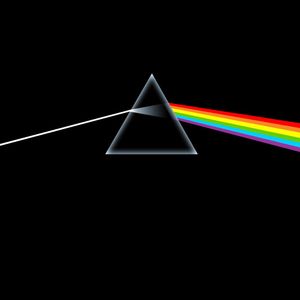
Pink Floyd’s “Dark Side of the Moon”

Pink Floyd Dark Side coverI spent a week listening to Pink Floyd’s 1973 album “Dark Side of the Moon” for what I can learn to improve my craft as a songwriting musician. I do this each week with a different album with some recognition as one of the greats. My father enjoyed Pink Floyd so I grew up hearing this album quite a bit. I know all these songs very well. So there wasn’t a lot of discovery happening; this week reminded me what I love about the album.

Experts on such things recommend that songwriters have interesting vocals start during the first 20 seconds. The thinking went that somebody reviewing demos would hit eject if it didn’t get their attention in that time. In today’s world of internet streaming, recommendations include having an attention-getting hook within 7 seconds.

In sharp contrast to that advice, this album opens with 36 seconds of nothing but a faded-in heartbeat. Indeed, the first 7 seconds only provide near silence. Then a variety of sound effects rise into a maddening crescendo, broken by a slow groove with bass, flanged guitar, echoey slide guitar, and electric piano. Sometimes the electric piano and slide guitar meld into each other, losing their identity. It’s eerily dreamy.

I like that the songs of the album flow into each, but each is distinct. With “Dark Side of the Moon,” Pink Floyd crafted a collection of individual songs conceived as whole. This idea of an album had a huge influence on me. Before Trip Gunn, I designed whole albums. I built a structure of songs supporting an overall concept. My albums incorporated a Floydian style of having one song lead into the next. I decided with Trip Gunn that I would focus on writing good songs rather than always trying to make big albums. Not that one is better than the other, I just felt I needed to change the way I was thinking.

One of my favorite songs “Time” has not one, but two intros. That’s not why I like it, but I find it interesting. The track starts with the end of an explosion (from the previous track) and several clock alarm chimes going off at once. The second intro is a long section of long-held bass notes on guitar, rototom rolls, and electric piano. The rototoms, which were a new instrument at the time, add interest to a section that I would otherwise find too long.

After two and a half minutes pass, the actual songs kicks in with vocals and a funky rock accompaniment. A lot is said about Floyd in terms of space and psychedelic rock, but they had a particularly funky side too. The back-and-forth play between instruments in songs like this is particularly interesting. I love making use of this in some of my own songs and would like to do it more often.

Of course, “Eclipse” as well as the track “Brain Damage” that leads directly into it. The song has a gospel feel, thanks largely to the organ and backing female vocals. But also the repeating I-IV7-I-IV7-I-II-V-V7-I chord progression give it a spiritually uplifting feel. Added to this is that the track builds into intensity until reaching the concluding lines “Everything under the sun is in tune, but the sun is eclipsed by the moon.” And the song is over, fade out heartbeat.

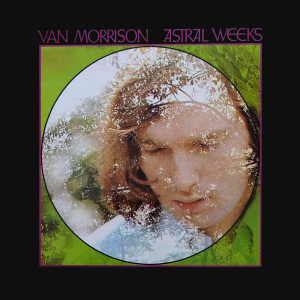
Van Morrison’s “Astral Weeks”

Van Morrison's "Astral Weeks" album coverI’ve been getting to know Van Morrison’s 1968 album “Astral Weeks” for my “To My Ear” project. Each week I listen to an album generally recognized for being great. The goal is to improve my own craft as a songwriting musician; The process also introduces me to some great music. I disliked this album with the first few listens and was really dreading giving it a full seven days. I heard little more than monotonous ramblings over musicians trying to find a song. Gradually, parts of it grew on me. Not only did I experience usual side-effect of familiarity, but my brain had to learn how to process it. I still don’t really like most of the album, but I came to like a few tracks.

The fourth track “Cypress Avenue” closes side one of the record. The music follows something a blues progression played with in a relaxed chamber folk style. The accompaniment consists of upright bass, acoustic guitar, harpsichord, violins, and flute. The violin and flute seem to be languidly improvising throughout the song. Their apparent lack of purpose beyond atmospheric accompaniment give the song a directionless quality shared with the rest of the album. The feeling of sameness makes the already long seven minutes feel like forever. Still, this song has a stronger sense of rhythm than most them. The blues structure helps the lyrics feel less like poetic ramblings.

Those lyrics carry a sense of nostalgia and longing. Their conscious of the distance between the present and the past within the locale. This is a topic that resonates with me strongly and one that I often visit in my own songs already.

The next track, “Like Young Lovers Do, opens the second side. Like, well, the rest of the album, the song flows along in a monotonous way. In this case it’s forgiven because it’s less then four minutes long. The use of strings and horns provides a sense of movement, especially at the close of each chorus. In fact, these instruments make the chorus feel like the chorus. It’s overall a nice little song. Though, honestly, it may largely benefit from sounding different than the rest of the album.

The next track Madame George consisting stood out as my favorite all week. It was the first to catch my attention. Even after listening to the whole album multiple times, none of them had the same grand sense of purpose and heart as “Madame George.” The lyrics provide enough narrative to draw the listener in, but enough ample room for questions and interpretation. “Madame George” is a seriously good song, even when not considering how boring the rest of the album can be.

Before I get into discussing this one track, let me say that I feel like I’m missing something by not appreciating the rest of the album. Maybe spending more time with it would help. However, my goal here is to improve my songwriting. I feel that a good song gets better with repeat listening; I’m not so sure that it should take more than a week of repeated listening to appreciate a song. I spent a full week with this album and only one song truly grabbed me.

The chords of “Madame George” repeat a standard I-IV-V progression throughout. The bass provides rhythmic movement. The percussion remains silent until the very end of the song a little high-hat picks up the pace of the outro. I’ve learned this option from a few other albums I’ve listened to: have the bass serve the rhythmic purpose usually the responsibility of percussion. Chords strummed on a quiet acoustic guitar add rhythmic texture to the accompaniment. In this case it bounces across the song emphasizing the chord changes.

Over this surprisingly engaging music, Morrison sings well-written nostalgic lyrics about a final meeting (or is it George) and departure. Van Morrison leaves a lot open to interpretation. Who or what is Madame Joy and why is the speaker meeting with Madame Joy? Why is she so concerned with the potential arrival of the cops? Why is the speaker leaving on the train and why meet up with Madame Joy before leaving? Even so, it’s more about emotion than details and backstory. Each verse, a heart-captured snapshot of an event. Of this ten minute song, I do feel like the last four minutes are unnecessary. Though this may represent the speaker riding away on the train, it extends the song past the story.

I love all of the lyrics, but the fourth is my favorite today

And then from outside the frosty window raps.
She jumps up and says, “Lord, have mercy I think it’s the cops,”
And immediately drops everything she gots
Down into the street below;
And you know you gotta go
On that train from Dublin up to Sandy Row,
Throwing pennies at the bridges down below.
And the rain, hail, sleet, and snow
Say goodbye to Madame Joy

I like that the startled reaction of Madame Joy gives a glimpse into her personality and lifestyle. The frosty window gives some indication what time of year it may be. We also learn that Madame Joy lives in Dublin and the speaker is taking the train to Sandy Row, which is in Belfast. The song started “down on Cyprus Avenue”, which is also in Belfast. I used Google Maps to figure this out. I get the feeling that the speaker is on Cyprus Avenue and gets hit with memories of Madame Joy, whom he goes to visit in Dublin. The visit isn’t all wonderful, and then heads back home on the train. So this verse helps put more of the story into perspective.

I also like that Madame Joy’s action of “dropping everything she gots down into the street below” will be echoed by the speakers “throwing pennies at the bridges down below” on the train ride. He pictures the “rain, hail, sleet, and snow” saying “goodbye to Madame Joy” which are all forms of precipitation like tears. While the song ends with several reminders to “dry your eyes for Madame Joy.” It’s a great song the way these things reveal themselves upon repeat listenings.

I wish I’d found the rest of the album so rewarding. I will definitely revisit, but I’m taking a break for a while from Van Morrison.

The Beatles’ “Abbey Road”

The Beatles' "Abbey Road" album coverI’ve devoted the past week to the Beatles‘ 1969 album “Abbey Road” for what I can learn to improve my own craft as a songwriting musician. This album has long been my favorite Beatles album, though I must admit I’m not familiar with all of them yet. I’ve been looking forward to this week. It would be a challenge to keep it short, but it’s also been a busy week for me otherwise; I haven’t had a lot of time to write

As with the two Beatles albums I’ve already spent a week with, melody drives these songs. The band plays interesting accompaniment throughout, but it’s usually in support of the vocals. Between vocal lines, some other instrument often follows the melody path tying parts together. These songs provide a lesson in the importance of melody and focal point.

Come Together” starts the album with a classic bassline. This paired with percussion that rolls across hi-hats and toms creates cyclic coming and going groove. The effect is engaging, groovy, somewhat bluesy and even a little sinister. I can almost see the motion created by this rhythm. It’s one of the most rock n roll songs on the album. The verse are in a common rock I-V-IV progression performed in a blues style. Then the chorus hits with a vi#-IV- V that builds in intensity to drop back to the opening tonic bassline groove. I really enjoy the lyrics; I can’t say they mean much. It’s rock n roll injected nonsense.

Here Comes the Sun” bears a bright open optimistic feel appropriate to the lyrics. The song accomplishes this even with several moments of descending glissando on accompanying instruments. My favorite part of the song is probably the middle eight, which begins exactly at the mid-point of the song. I like the combination of use of the Moog synthesizer with very nature sounding handclaps.

I find the lyric to be a bit too cheerful hippie-dippy; Yet, I do appreciate the pastoral quality of lines like “Little darling, it’s been a long cold lonely winter. Little darling, it feels like years since it’s been here: Here comes the sun.” They sidestep excess elements of human society and modern life to focus on a basic and enduring fact of nature: the change of the seasons.

My favorite part of the album is the medley of songs that make up most of side two: “You Never Give Me Your Money,” “Sun King,” “Mean Mr. Mustard,” “Polythene Pam,” “She Came In Through The Bathroom Window,” “Golden Slumbers,” “Carry That Weight,” and “The End.” I’ve always had a thing for songs with multiple sections and side 2 of Abbey Road more than qualifies.

These were apparently unfinished songs written by the Beatles, therefore worked together to form a whole. Somewhat of an exception is “Golden Slumbers”, a song largely based on “Cradle Song” by Thomas Dekker. This poem from the 17th century read:

Golden slumbers kiss your eyes,
Smiles awake you when you rise;
Sleep, pretty wantons, do not cry,
And I will sing a lullaby,
Rock them, rock them, lullaby.
Care is heavy, therefore sleep you,
You are care, and care must keep you ;
Sleep, pretty wantons, do not cry,
And I will sing a lullaby,
Rock them, rock them, lullaby.

The main difference in the Beatles song is the addition of the lines “Once, there was a way to get back homeward. Once, there was a way to get back home.” which draws out the melancholy latent in the original. This beautiful tune with theatrical qualities leads into the burst of a ending march “Carry That Weight.” “Carry That Weight” repeats the melody of “You Never Give Me Your Money.” This ties the medley together. The lyrics then makes what I believe to an inverse reference to “Send Me The Pillow You Dream On” with “I never give you my pillow, I only send you my invitations.”

David Bowie’s “The Rise and Fall of Ziggy Stardust and the Spiders from Mars”

David Bowie's "The Rise and Fall of Ziggy Stardust and the Spiders from Mars" album cover This week, I’ve been listening to David Bowie’s 1972 “The Rise and Fall of Ziggy Stardust and the Spiders from Mars”. I’d heard some of the songs before, but I’d not listened to the whole album before this week. I loved the Bauhaus cover of “Ziggy Stardust” and the Nina Hagen cover. This concept album is musical theater that tells stories about a messianic alien outsider. The central character of Ziggy Stardust personifies the legends and mythology of rock music. Bowie wrote his own legend like a child playacting as their self-crafted superhero. There remains this sense of ambiguity, though, so Ziggy could just as well be a combination of Bowie and Ronson.

The album opener “Five Years” set the scene that the Earth is in danger with beautiful variation of the 50s doo-wop chord progression. A dry kick drum and snare slowly fade in to start the song, and then a slowly strummed chord. The well-written opening lines “Pushing through the market square, so many mothers sighing; News had just come over, we had five years left to cry in” nearly tell the whole story indirectly. I love that emotional imagery hits before the factual news.

Bowie also insist upon rhyme on this album. In the first verse of “Five Years” all four lines rhyme: “sighing”, “cry in”, “dying”, “lying”. After that, the rhymes are in couplets. Towards the end, Bowie sings “And it was cold and it rained so felt like an actor; And I thought of Ma and I wanted to get back there.” This particularly clever rhyme made me realize something about the album. While Bowie is definitely singing, his vocals are just as much the performance of an actor.

Moonage Daydream” slams in with glam rock guitars and vocals. Like much of the album, I can hear that Marc Bolan and David Bowie were significant influences on each other. The lyrics bristle with rock n roll nonsense that recalls Bo Diddley, Bill Haley, and Jerry Lee Lewis. As an androgynous space invader, Bowie yanks the danger and fire of 50s rock into 1972.

The next track “Starman” tells of the bewildered and bewitched audience catching the radio pirate emission. The starman arrives a cautious savior warning the inhabits of Earth “not to blow it, cause he knows it’s all worth while.” And then he encourages the children to lose it, use it and boogie, which again makes me think of Marc Bolan. The last verse has two young listeners discussing what they heard on the radio. The final line of “Don’t tell your poppa or he’ll get us locked up in fright” reminds us that rock n roll is risky music for youth in rebellion.

The album closer “Rock N Roll Suicide” is probably my favorite track. It has a driving anthemic rhythm that runs from the intro with bare strummed acoustic guitar to the final crescendo of horns, strings, drums, electric guitars, chorus, and desperately cried vocals of “gimme your hands!” It begs for audience participation. The first verse is cinematic in its narrow focus, iconic and poetic with its step-by-step description of disappointment and emptiness:

Time takes a cigarette, puts it in your mouth
You pull on your finger, then another finger, then your cigarette
The wall-to-wall’s calling, it lingers, then you forget
You’re a rock ‘n’ roll suicide

This is another album that musically is built on basic rock ‘n’ roll chord progressions, many looking back to the doo-wop era. The production is early 70s dry, without the massive reverb found in the early 60s or the shimmering reverb later heard in the 80s. The creates punchy drums that sound fantastic on vinyl. While the instruments are generally playing relatively simple parts, they create a great sound. Bowie’s performance makes us want to believe. It’s really quite out of sight.

Bruce Springsteen’s “Born to Run”

Album cover for Bruce Springsteen's "Born to Run"

I listened to Bruce Springsteen‘s 1975 LP “Born to Run” this week for lessons to improve as a songwriting musician. When I was a teenager, I rejected Springsteen’s music. His songs seemed for a completely different crowd, of a different age and a different culture. I heard “Born in the USA” and saw crowds of parents and grandparents pumping raised patriotic fists. I heard another song repeat “I’m going down, down, down, down.” and thought “What awful lyrics!” Only a few years ago did I learn that my assumptions were absurdly wrong. I especially learned a lot this week with my focused listen. Considering my own songwriting style and evolution, this album proves that Springsteen is somebody I definitely should be paying attention to.

The title track “Born to Run” opens side two of the album as the fifth track of the album. It received radio play nearly 8 months before recording of the rest of the album was completed. A wall of sound hits the listener within the first few seconds. The influence of Phil Spector’s signature sound is all over this album. The song “Born to Run” perfectly captures the heart of the album; This makes it a great centerpiece as well as a good introduction. The sound is desperately nostalgic and longingly anthemic; You can smell the roar of engines driven hard by drivers with hands still stained by grease, but also see the high school dance filled with couples nearing the end of youth.

This sound is perfectly suited to the words. The masterfully crafted lyrics on this album deal with tales of working class American youth and early adulthood. They do so with a raw but poetic nostalgia that avoids, but comes quite close to, sentimentalism. The characters in these stories of desperation are taking chances on love and life with just one last hope. They probably won’t make it, but the thrill and experience of the effort is reason enough to try.And see how the story of “Born to Run” is started:

In the day we sweat it out on the streets
of a runaway American dream
At night we ride through mansions of glory
in suicide machines

Basically, he’s saying they work all day so they can drag race at night. But what a way to say it! Through word-choice and carefully selected metaphors, he relates the two activities to enhance their similarities and differences. The work for the “American dream” seems futile while the mansions of those who’ve commandeered the American dream surround the speaker’s dangerous pastime. Here I only start to interpret the first two lines. If I wasn’t determined to describe my experience listening to the whole album, I would love to examine the lyrics of this single song. Given time, I could surely write volumes.

That presents one of the greatest lessons to take away from this album. Springsteen worked and worked on these lyrics. The first draft of “Born to Run” shows how much he changed the verses before the final version. I usually revise my own songs many times for years, but it’s important to see how much can be changed. In a few cases, I’ve kept only a few words of my first draft, but the feeling has remained the same. You can see in his first draft that Springsteen had imagery and emotion, but didn’t quite have the heart of the song yet.

Good poetry often elevates the mundane, often to the sublime. Springsteen so expertly elevates the mundane that it’s difficult to realize that it was ever mundane. He romanticizes the emotional struggle of everyday and the desire to escape the inevitable trap of the day-to-day. In “Thunder Road“, he opens with a description of the unexceptional.

The screen door slams Mary’s dress sways
Like a vision she dances across the porch as the radio plays
Roy Orbison singing for the lonely
Hey that’s me and I want you only
Don’t turn me home again
I just can’t face myself alone again

Standard rock chord progressions and song structures provide the backbone of these tracks, with plenty of I-IV-V and I-V-IV throughout. This strengthens the the mood and theme of the album. This vision of rock music dances on the front porch, but also climbs into the front seat to escape this old town.

The Phil Spector style production sounds better on this album than on most of the records that Spector himself actually produced. For his wall of sound, Phil Spector would record multiple musicians playing the same thing simultaneously and run it through echo chambers. This created a magical mess of sound. If focus on the background accompaniment of The Ronettes’ Be My Baby, you’ll notice how it’s a somewhat indistinct wash of instruments. Yet, Spector’s technique had the power to sonically elevate the mundane. Similar production provides Springsteen’s album with its sound while maintaining integrity of individual instruments. It’s really a wonderful thing to hear. One of my favorite tracks, She’s the One probably gets the closest to that messy wash, but still sounds great.

This has definitely been one of my favorites for this project of listening one great album each week. I’m looking forward to the next Springsteen.

We got one last chance to make it real
To trade in these wings on some wheels

The Jimi Hendrix Experience’s “Are You Experienced”

Jimi Hendrix Are You Experienced album cover

I devoted the past week to Jimi Hendrix Experience‘s 1967 debut LP “Are You Experienced” to learn as a songwriting musician. Hendrix did not much appeal to me when I was a teenager. His status as a god among guitarists gave me the wrong expectations, something like Joe Satriani, who I never liked anyway. I found Jimi’s guitar playing sloppy and didn’t initially care for his singing. Years later, I heard second chance without the expectations. What I heard as sloppy before, I now hear as human expressiveness. I hear an innovative guitar-player deeply connected with their instrument. In contrast to Joe Satriani’s technically brilliant guitar playing, Jimi’s confident playing exudes heart and soul.

Album opener “Purple Haze” starts with a short strange percussive march played on guitar and bass before breaking into one of rock’s greatest guitar riffs. Throughout the song, bass, guitar and drums work together to create a monument. The bass provides a full strong foundation upon which the fuzz guitar builds a wall of harmonics-ladens rock. At the 30 second mark, Jimi shouts “Purple haze all in my brain!”. The vocals drip with heavy reverb and are oddly panned full right.

The usage of panning throughout the album is often awkward and disorienting. The use of reverb on the vocals in “Purple Haze” make the panning feel even more unnatural, because the reverb also is completely in the right channel. I understand that these decisions were results of many era-specific factors: limitations of the recording equipment, a sense of youthful experimentation because stereo was still fairly new, limitations of listening equipment as some listeners were probably still on mono equipment. The drums were nicely recorded in full stereo, so they are spread across the stereo field in a way that feels natural. I’m obviously not saying that things need to feel natural, but the use of stereo effects on this album can distract from the music rather than add to it.

One of my favorites, “Love or Confusion“, makes a wonderful combination of guitar-playing and guitar-experimentation. While the bass provides a solid textural groove, Jimi strikes power-chords and individual notes letting them ring out with fuzzy bliss until they just start to grab a little feedback. My love of fuzz and feedback made this song instantly grab my attention. Unfortunately, they couldn’t keep their fingers off the pan knob and the guitar will occasionally dive left then right. This movement flattens the guitar by making it obvious that it takes up a single point in stereo field. But still, that use of drums and bass to create an rhythmic bed while the guitar produces an atmosphere of noise is amazing.

The Jimi Hendrix Experience arranged these songs strategically well. Instruments, including vocals, take turns having focus while the others pull back to support the lead. This often shows up with vocals and guitar taking turns as lead, which undoubtedly comes from the blues. In some songs, it’ll be that the guitars do something to punctuate the beat, then they fall back for a vocal line, then return to the guitar, then vocals.

For the most part, I find the lyrics on the album to be better than average, but not necessarily amazing. Most of the tracks, like “Manic Depression”, feature very direct lyrics that I think are well-written sincere expressions of their subject. This writing and performance without posturing contributes heavily to the album’s greatness.

The Wind Cries Mary” stand out for me as the best on the album, which was apparently written after he and his girlfriend (not named Mary) had had a fight. The last verse makes brilliant use of imagery in a way that everybody can relate to. Jimi uses word-choice here like a palette to paint this scene of loneliness and regret. The room is so empty that the speaker’s absence is felt even though they are in the room.

The traffic lights they turn blue tomorrow
And shine their emptiness down on my bed
The tiny island sags downstream
Cause the life they lived is dead

The song “Hey Joe“, written by “Billy Roberts, has long been one of my favorite songs. Even when I didn’t care of Hendrix so much, I enjoyed “Hey Joe” and it’s definitely for the music. I do like some murder ballads, but I don’t particularly enjoy the words of this one. The single chord progression repeats throughout the song. It feels like a non-stop coda from the opening that could go on forever. Probably because this song in E minor never fully resolves to the chord of E minor. The chord progression goes C – G – D – A – E (VI – V – VII – IV – I). That’s a very unusual chord progression for me, though it doesn’t sound strange at all. This leads me to think about the possibilities of not fully resolving a chord progression; I appreciate the non-stop cyclic feel it produces here.

Overall, I really enjoyed several of these songs, especially the sound of the lead guitar parts.